
It isn’t every day we encounter a firsthand account of escaping religious extremism. Leaving a cult-like existence is one of the most mentally and physically demanding challenges a person can endure. Yet in her memoir Educated, Tara Westover not only escapes — she transforms. Raised in a household governed by paranoia and abuse, Westover is a testament to the liberating force of education. For over two years, Educated remained on the New York Times bestseller list. It is more than a memoir; it’s a haunting reflection of the forgotten children in America. More than seven years after its release, it remains a tribute to the importance of seeking knowledge. Despite the deeply rooted psychological web spun around her, Westover breaks free into a world greater than she could have ever imagined.
A Bleak Childhood
For as long as she could remember, Tara’s life was filled with fear. Her father, a devout man who dedicated his life to the Church of Jesus Christ of Latter-day Saints, was consumed by conspiracy theories and apocalyptic prophecies. He warned his children about the ‘Feds,’ government agents whose purpose was to abduct them and turn them over to Satan. He obsessively worked with his family to prepare for the “End of Days”, a future where they would have to be completely self-sustainable to escape obliteration.

For a while, Tara didn’t even have any proof of identity until much later, when her mother filed for a birth certificate. She was not given a chance to attend school. Instead, her parents opted for homeschooling. However, with six older siblings, she was mostly left to educate herself.
Sometimes, Tara assisted her mother with delivering babies as a midwife. Although midwifery was not completely illegal in Idaho, they had to operate carefully during delivery or else risk facing malpractice charges. Tara’s mother, the only midwife for a hundred miles, was one more of her father’s tools to prepare for the End of Days, in which the family would have to deliver their own children without the help of outsiders.
A Culture of Fear
The family’s distrust of the government, though extreme, was reinforced by local legends and folklore. Westover’s grandma often told the children stories of the ‘legend of the Apache tears’. Hundreds of years ago, Apache warriors had fought the U.S. cavalry on their land and lost. The warriors charged off the face of the mountain rather than being killed at the hands of the government. It was assumed that the Apache women were later slaughtered. Hearing stories of government brutality isolated the family from the outside world.
The deep-seated fear shaped every family decision. Early one morning, Westover’s seventeen-year-old brother, Tyler, was driving the car on a long trip through the Midwest. Tyler fell asleep at the wheel. The car swerved off the road and hit a telephone pole. The family was left seriously injured. Tyler was coughing up blood, her sister Audrey had a disfigured nose, and Tara suffered a deep gash in her arm. But it was her mother who faced the brunt of the trauma, and although she spent weeks recovering, her father said the doctors “couldn’t do anything for her anyhow”. For the rest of her life, Tara’s mother was not the same person. Her father’s decision was a landmark — a moment proving his commitment to self-sufficiency over science and faith over fact.
But over time, Tara began to notice cracks in his logic. Her father believed in a conspiracy he called Y2K. He believed all computer systems would fail on January 1st, 2000, because they were programmed with a six-digit calendar. According to him, the world would be launched into utter chaos. The family worked tirelessly, stockpiling enough goods for ten years in preparation for the event. On New Year’s Eve that year, Tara stayed up all night waiting for the disaster to ensue. Of course, nothing happened, and she began to doubt her father’s credibility.
Breaking the Cycle
Despite their geographical and ideological isolation, Tara and some of her siblings sensed that there was a better life for them elsewhere. Tyler was the first sibling in the family to attend college. Although he didn’t have a formal education, he wanted to enroll at Brigham Young University (BYU) after claiming he was homeschooled. Tyler studied for the ACT by buying textbooks and learning on his own. He managed to pass and was admitted, an inspiration for Tara.
Tara soon decided to set her sights on college. She studied hard, making up for all the lost years of education, and passed her ACT with a score of 22. Determined to improve, she earned a score of 28, enough to earn admission to BYU. Her parents were furious when they heard of her decision. They feared that she would be tricked by the government during college into a life of sin. In some ways, her parents were right. College did change her, but it also liberated her.
A Shifting Perspective
When Tara entered BYU, her entire worldview began to change. She was shocked by the culture change when she stepped onto campus. Even though BYU was a Mormon university, she gawked at her peers’ habits. Her roommates wore “immodest” clothing and broke the Sabbath. Tara considered them Gentiles, and it was difficult for her to navigate campus life.
The material she learned in class directly opposed the schooling she had received at home. She learned about the Holocaust, which Tara researched after not recognizing the word in class. In another class, she learned about the horrors of slavery, which her father had told her was a good thing.
Tara had to learn much of the knowledge that other students would normally call common sense. She believed that Europe was a country, and as a result, she had much confusion in her Western Civ class. The Great Depression, Stalin, Hitler, the civil rights movement, and World War II were just a couple of the other topics Tara had to learn. She had only ever seen one African American person before — the adopted child of a couple in town. Her homeschooled education left her oblivious to every skill needed to succeed in the outside world. BYU exposed her to a world of new habits and people.
For a while, Tara insisted that her homeschooling was the better route for her — her acceptance into BYU, she believed, proved that it was at least just as good. However, she didn’t fit in with the other students. She didn’t understand how to write an essay or follow a syllabus. The beginning of the first semester was rough for her, both socially and academically. Still, she adapted. At the end of the first semester, she earned an academic scholarship worth half of her tuition.
And the more time she spent away from home, the more accepting she was of modern views. She drank coffee for the first time and reevaluated her attitude towards feminism. Eventually, she began to feel ashamed of many aspects of her childhood, from her lack of hygiene to the treatment she received from family members. When she became the third student from BYU ever to earn the Gates Scholarship, hounded by interviewers, she refused to reveal that she had never gone to school.
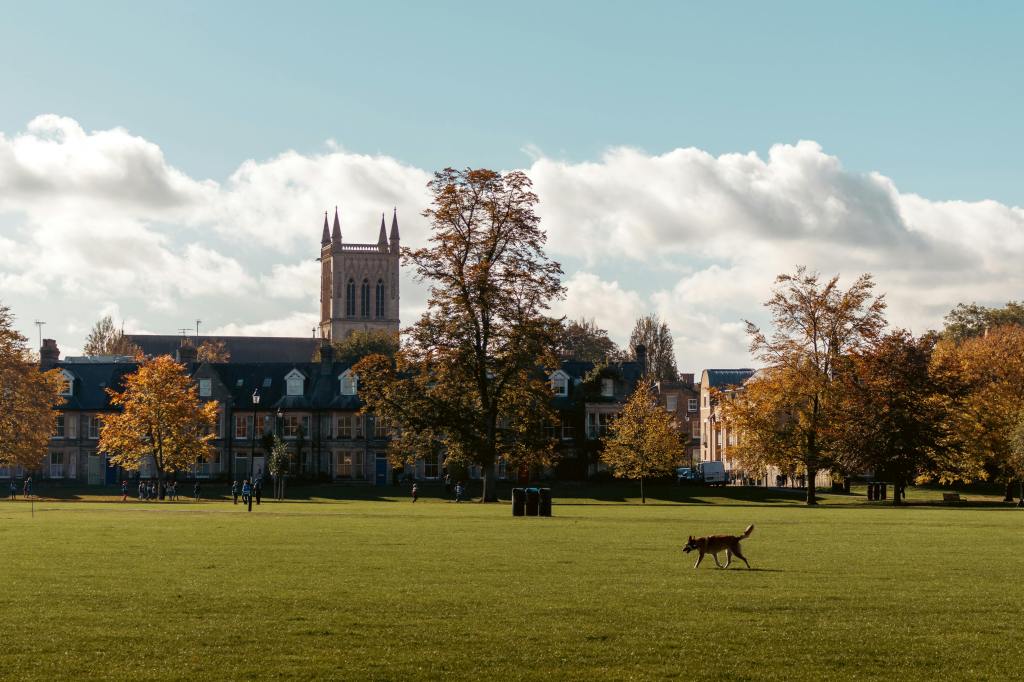
Tara excelled in college despite all the years of content she had to make up for. She was soon admitted into a PHD program in Cambridge on the other side of the ocean. Still, Tara’s childhood continued to haunt her. Her parents, still distressed, told her they could save her if needed, as long as she was still at BYU. With Cambridge on the other side of the ocean, they could not protect her from the End of Days. They believed she would perish alone in a foreign land.
Breaking Free
Tara’s journey was not a clean break – it was a gradual unraveling. Her experience brought ceaseless waves of confusion to her life. At times, she wasn’t sure whether to trust her family or the outside world. She questioned her memory of the abuse she faced at home, exacerbated by her parents’ and siblings’ refusal to face their actions. She relied on accounts of people around her to discern whether her memories were even real. Tara eventually began to trust the world over the family, but she still required counseling and support to get there.
She grieved at the divide she caused in her family. But after getting a proper education, she realized that it was all worth it. She embraced feminism and wrote essays about religious paranoia. Tara promised herself never again to speak about topics she was ignorant of.
Conclusion
Educated is not only a story of a young girl’s childhood, but also a message of the value of an education. It’s a reminder that education is not just found in textbooks and degrees – it’s about understanding your story, your truth, and your future. In a world where information is found in abundance, Educated is a memoir of one woman’s struggle to understand it.
 Margin Notes