
We often think about segregated schools as a relic of America’s past, a form of racial oppression corrected by the landmark Brown v. Board of Education decision in 1954. But in reality, segregation hasn’t disappeared; it merely appears in a different form. De facto segregation continues to persist, with many modern schools consisting of almost completely homogeneous populations.
On the bright side, the issue has not gone entirely unnoticed. A 2018 Boston Globe article admitted that 55% of Americans view school segregation as a “big” or “somewhat big” issue. Efforts to address this problem have largely fallen short. In Massachusetts, for example, 17% of public schools have become even more segregated over the past 50 years. Despite the many decades that have passed since Brown, education inequity continues to grow, broadening the gap between schools dominated by minority populations.
As activist Jonathan Kozol writes in his book An End to Inequality, school segregation is “at its highest level since the early 1990s.” This is not just a demographic issue; deeply structured systemic flaws result in a lack of equity within these schools. Students enrolled in institutions with a lower white population report having fewer resources, a higher student-to-faculty ratio, and fewer academic opportunities. The resegregation of many American public schools today only exacerbates this problem.
So if every school is meant to offer the same quality of education, regardless of the racial profile of the students they serve, what’s the problem? A closer look at the lived realities of underfunded schools reveals why this demographic divide matters.
Educational Quality: A Matter of Dignity
One of the largest problems that minority-majority schools face arises from unequal access to funding. Decades of insufficient subsidization for underserved communities greatly hinder the outcomes of enrolled students. As a result, schools with greater minority enrollment tend to suffer from poor infrastructure and pose risks to students’ health.
A 2021 Forbes article reported that 41% of school districts failed to test their water for lead in the two years preceding the article’s publication. Of those that did, nearly a third found elevated lead levels. Similar to the Flint Water Crisis, the issue disproportionately affects schools serving people of color.
But the problems don’t end there. Far too many schools lack adequate cooling systems, causing unbearable learning conditions on days with extreme weather. With the average age of American public schools over 40, many lack the funding required to sustain the infrastructure. Holes line classrooms and hallways. Restrooms frequently run into issues with plumbing. Students who attend these schools are faced with a demoralizing environment, stifling the appeal of education that students require in order to flourish.
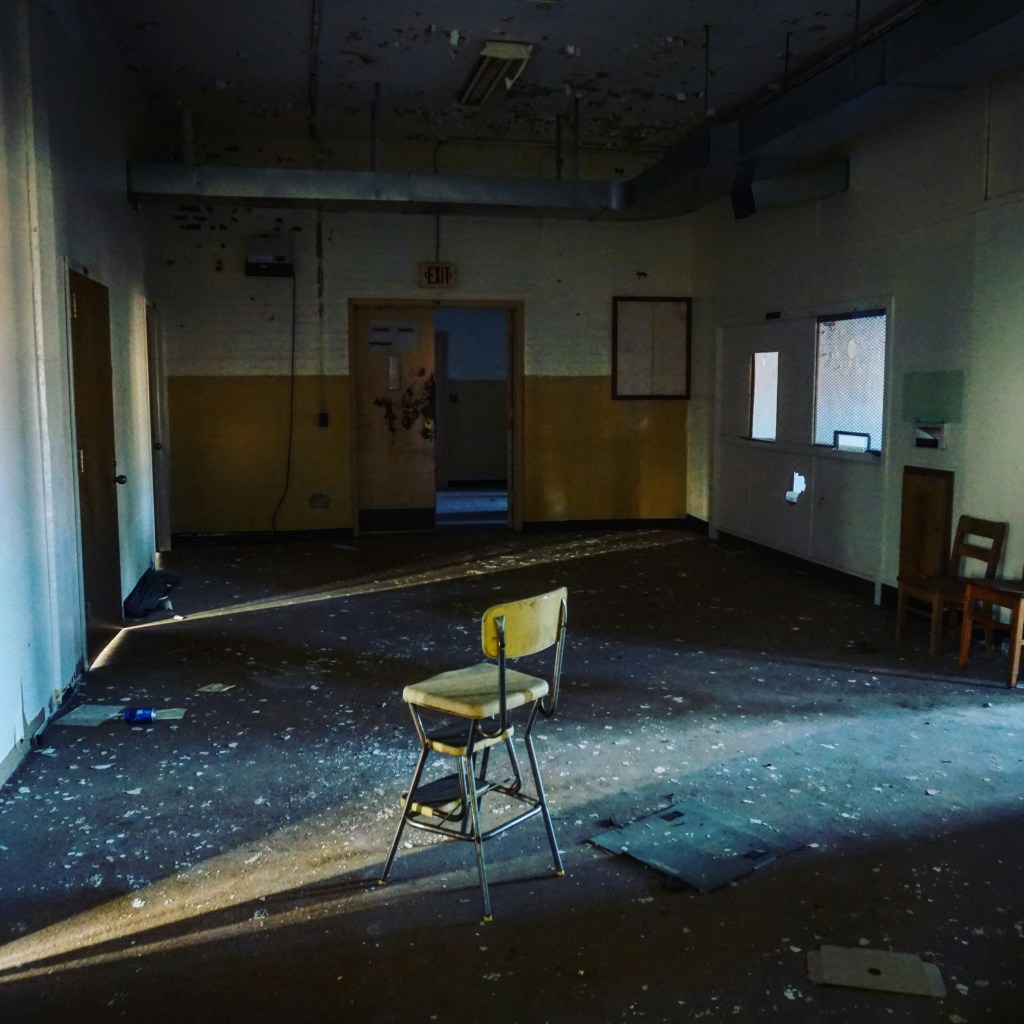
However, critics of school renovation projects reject the idea that costly repairs will significantly affect a child’s academic achievement. Why would cleaner bathrooms or nicer classrooms improve their self-motivation or intellect? However, as Kozol challenges, this idea directly contrasts with the picturesque images of private and charter schools that parents desperately search for. Why pay high tuition for an “unnecessary” experience?
The answer to this lies in the sense of dignity given to children. Academic achievement relies on psychological factors, and America’s eroding public schools demoralize students. Prestigious schools, on the other hand, offer students an invaluable sense of self-worth. Students who are given top-notch facilities are filled with encouragement rather than dissatisfaction — a right not offered to America’s neglected students.
Teaching Styles: Inequality in the Classroom
Educational inequality doesn’t end where funding is concerned. It extends to the methods schools use to educate their children. The difference in pedagogy between schools with a majority of white and Asian students and a majority of African American and Latino students points to a fundamental difference in treatment between modern segregated schools, one where “separate but equal” doesn’t remotely hold up.
An End to Inequality depicts some of the teaching styles that fail these students. As opposed to their counterparts, schools with large minority enrollment face a stifled creative environment where discipline rather than curiosity is upheld. Kozol writes that “Black schools prioritize discipline and punishment over intellectual curiosity and creativity”. Teachers are trained to implement strict rules to foster obedience. Many school administrations go as far as to hire retired military officers, lawyers, and corporate executives.

At one New Haven high school, a principal ordered teachers not to accept any questions — a rule aimed at keeping classes on strict schedules. Another Boston elementary school adopted a simulated cash economy in which students had to pay to earn “a bathroom right”. In elite private schools or even affluent public schools, the act of withholding basic human rights to such an extent would be unthinkable. The notion that certain groups of students require harsher educational treatment is reminiscent of the era of Jim Crow and eugenics.
During the most formative years of a child’s development, the treatment they are given by their schools will shape the rest of their future. And in many schools, the pedagogy reinforces inequality instead of dismantling it.
Corporal Punishment: A Lingering Injustice
The disparities between segregated schools become even more alarming when we look at discipline data. In an article written by the National Education Association, 23 states have not officially put an end to corporal punishment — a practice defined by the U.S. Department of Education as “paddling, spanking, or other forms of physical punishment imposed on a child.” The practice can often lead to lasting psychological distress.
For the 2017-2018 school year, around 70,000 students were given some form of corporal punishment. Disturbingly, African American students were four times as likely to face this treatment.
In some states, students may be forced to relocate to “lockdown rooms”, even without posing any kind of imminent danger. Again, the racial discrepancies become evident. Kozol notes that in the District of Columbia for the 2015-2016 school year, 94% of the students subjected to this type of punishment were African American, while the remaining 6% were either Latino, Native American, or mixed race.
While parents are often given the ability to opt out of corporal punishment, this freedom is often illusory. Students whose parents do not consent to physical punishment are instead faced with potential consequences such as suspension and expulsion. In effect, parents are forced to choose between physical violence and exclusion.
A System in Need of Radical Change
Resegregation isn’t just about where students sit in a classroom. It’s about the difference in resources and treatment that shape their futures. Equal opportunities begin with equal conditions. If we are serious about racial inequality, we should search beyond the surface-level solutions that have already failed our students. No child, regardless of race or zip code, should be excluded from the opportunity for a good education.
 Margin Notes