
In 1798, demographer Thomas Malthus predicted that the human population would eventually outgrow the available food supply. His ideas didn’t just penetrate the realm of academia – they also shaped legal policy, economics, and the way entire societies viewed themselves. Alarmists foresaw a future filled with endless malnourishment and suffering.
But today, the world looks nothing like the future Malthus predicted.
According to The Washington Times, “Obesity has eclipsed hunger as the top threat to global health”. In 2022, 1.04 billion people worldwide suffered from obesity, while the number of malnourished people is under 550 million – and continues to decline.
So what happened between 1798 and today? This post explores the rise and fall of Malthusianism, and how humanity broke free from a cycle of scarcity that once seemed inescapable.
Who Was Malthus?
Thomas Robert Malthus was an English economist and demographer best known for his ideas surrounding population growth. Born into a wealthy family in 1766, he was educated at Jesus College, Cambridge.

One of his notable early works was the unpublished pamphlet The Crisis. It expressed his favorability toward England’s current Poor Laws, which promoted workhouses for impoverished citizens. However, a couple years later, his thoughts took a darker turn. He began to argue against the public welfare on the basis of his newfound ideology, Malthusianism.
The Rise of Malthusianism
In 1798, Malthus published his most infamous work, An Essay on the Principle of Population. In this book, Malthus argued that while resources such as food increase arithmetically (1, 2, 3, …), populations increase geometrically (1, 2, 4, 8, …). In short, Malthus believed the population was growing faster than the food supply could support it. If left unchecked, society would inevitably continue to increase until its resources were too scarce to support everyone.
His conclusion? Society required regulations to curb the inevitable cycle of suffering. And the checks he proposed weren’t passive – they required strict moral and social regulations, especially targeting the lower classes.
Eugenics and Public Policy
Malthus began to argue that social welfare was only destructive towards society. It enabled, he believed, economically disadvantaged women to have more children. This in turn exacerbated poverty. Malthus also argued for a “preventative check” – forcing women to withhold from having children until they were well into their late 20s.
Malthus’s ideas fueled the eugenics movement of the 19th century. If fewer poor people were born, he believed, human suffering would dramatically decrease. Therefore, a surefire method of increasing society’s prosperity was to discourage impoverished families from reproducing. Only then could society overcome the cycle of malnourishment.
One notable consequence of An Essay on the Principle of Population was its effect on British welfare. The Poor Laws he had previously supported were reformed to treat disadvantaged English families in a harsher manner. In doing so, the government hoped it would stop encouraging poor families “to have more children”. Poor communities were left to fend for themselves in hopes that natural selection would limit poverty’s prevalence.
At the time, Malthusian ideas were not completely unfounded. Since the beginning of the human race, much of the population spent over half of their energy and money in an attempt to obtain the essential nutrients and calories it took to survive. Global economies relied heavily on agricultural activities.
Take the American economy, for example. In 1790 – close to when Malthus published his ideas – 90% of the workforce was employed on farms. Today, this figure is closer to 2%.

Still, it was not nearly enough to support a rapidly growing population. Women gave birth to many more children, but a large proportion of them were too malnourished to survive to adulthood.
And yet, something unexpected began to happen.
The Long 20th Century
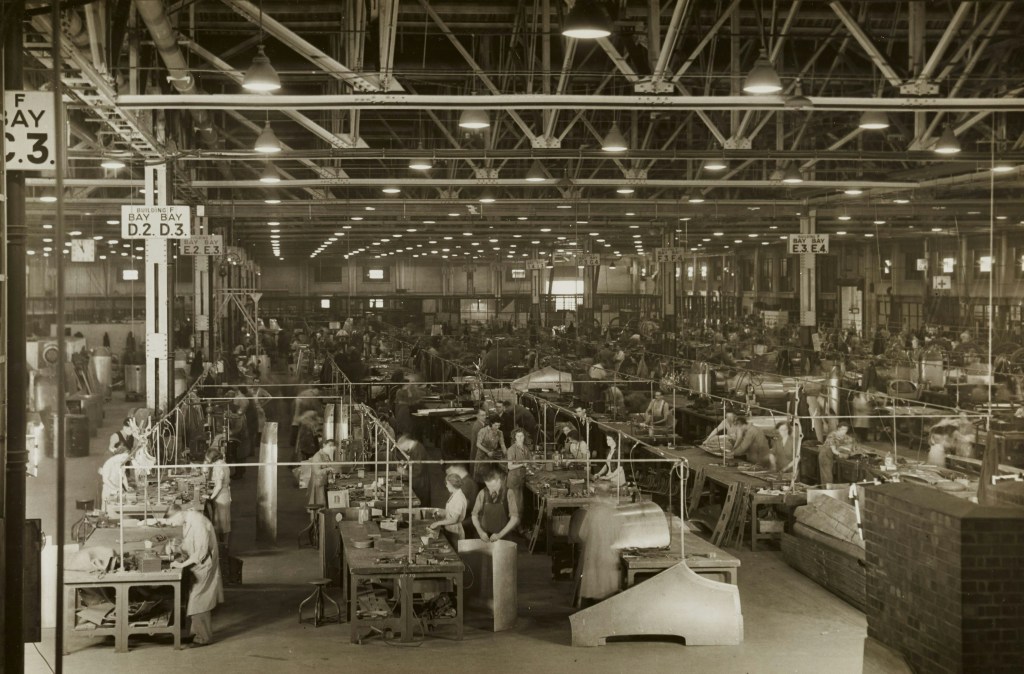
Beginning around 1870, a period historian Brad DeLong calls the “long twentieth century” (1870-2010) transformed the global economy. For the first time in history, human innovation increased exponentially – and it didn’t stop. Malthus’s ideas were obliterated.
Three forces made that possible:
The Industrial Research Lab
In his nonfiction book Slouching Towards Utopia, DeLong argued that the modern laboratory drastically altered the pace of technological advancement. “What changed after 1870,” Delong argued, “was that the most advanced North Atlantic economies had invented invention”. Instead of new technology being released at singular episodic points in history, people recognized the lucrativeness behind creating something new or advancing previous investments. The long 20th century brought an unprecedented wave of technological progress that failed to slow down as the decades passed by.
The Modern Corporation
For all the benefits that innovation brought to the world, none of it would have caused such an increase in prosperity without the creation of the modern corporation. DeLong expressed that inventors such as Edison and Tesla, pioneers of the electrical industry, now “did not have to fulfill the ten other roles that their predecessors had to fill, from impresario to human resource manager”. Investors and manufacturers flocked to support some of the discoveries made in the research labs. Corporations took the heavy workload off of inventors and developed their ideas for widespread use.
Globalization
Finally, one of the greatest tools humans used to escape the population trap was the interconnection of different regions and countries. World trade in the 1500s stood at just under 1.5% of total world production. In 1850, just twenty years before the start of the long 20th century, it rose to 4% – but in 1880, this figure jumped to 11%.
Globalization allowed regions to specialize. Innovations created by the industrial research lab (railways and steamboats, for example), which were manufactured by modern corporations only sped up regional interconnectedness. Those who had a comparative (relative) advantage in certain goods and services benefited from focusing production on them. As a result, total production increased, and global prosperity flourished. Today, international trade makes up 30% of the total world production.
Together, the results were remarkable. By the time the second industrial revolution had ended, the world had drastically altered for the better. Huge chunks of the population no longer had to work in agriculture to survive. Instead of being ruled by nature, as Malthus had predicted, humans were able to control it.
The Choice Ahead
In 1870, approximately 70% of humanity lived at $2 or less per day. Much of their paycheck was spent on obtaining the baseline number of calories required for survival. Today, this figure is less than 9%.
Thomas Malthus’s prediction of infinite famine did not account for the innovation, cooperation, and global scale. Less than a century after An Essay on the Principle of Population, Malthusianism was overcame.
While Malthus’s original predictions were overcome, new concerns have revived elements of his thinking. Modern obstacles– climate change, water scarcity, and environmental degradation– place new constraints on humanity and may limit us in the future. Unless new innovations create solutions to these problems, there is no guarantee that humanity is forever free from the Malthusian trap.
Whether we remain free depends not only on our history, but what we build when faced with our next challenge.
The rise and fall of Malthusianism is a reminder of humanity’s strengths. When faced with limits, we don’t always break down – we break through.
Notes
- J. Bradford DeLong’s book Slouching Towards Utopia can be found for sale here.
- If you’re interested in how modern financial thinking reframes scarcity and wealth creation, check out my post on Rich Dad Poor Dad here.
 Margin Notes